Continuing the Legacy - Women in Fly Tying
An interview with Christina Mueller
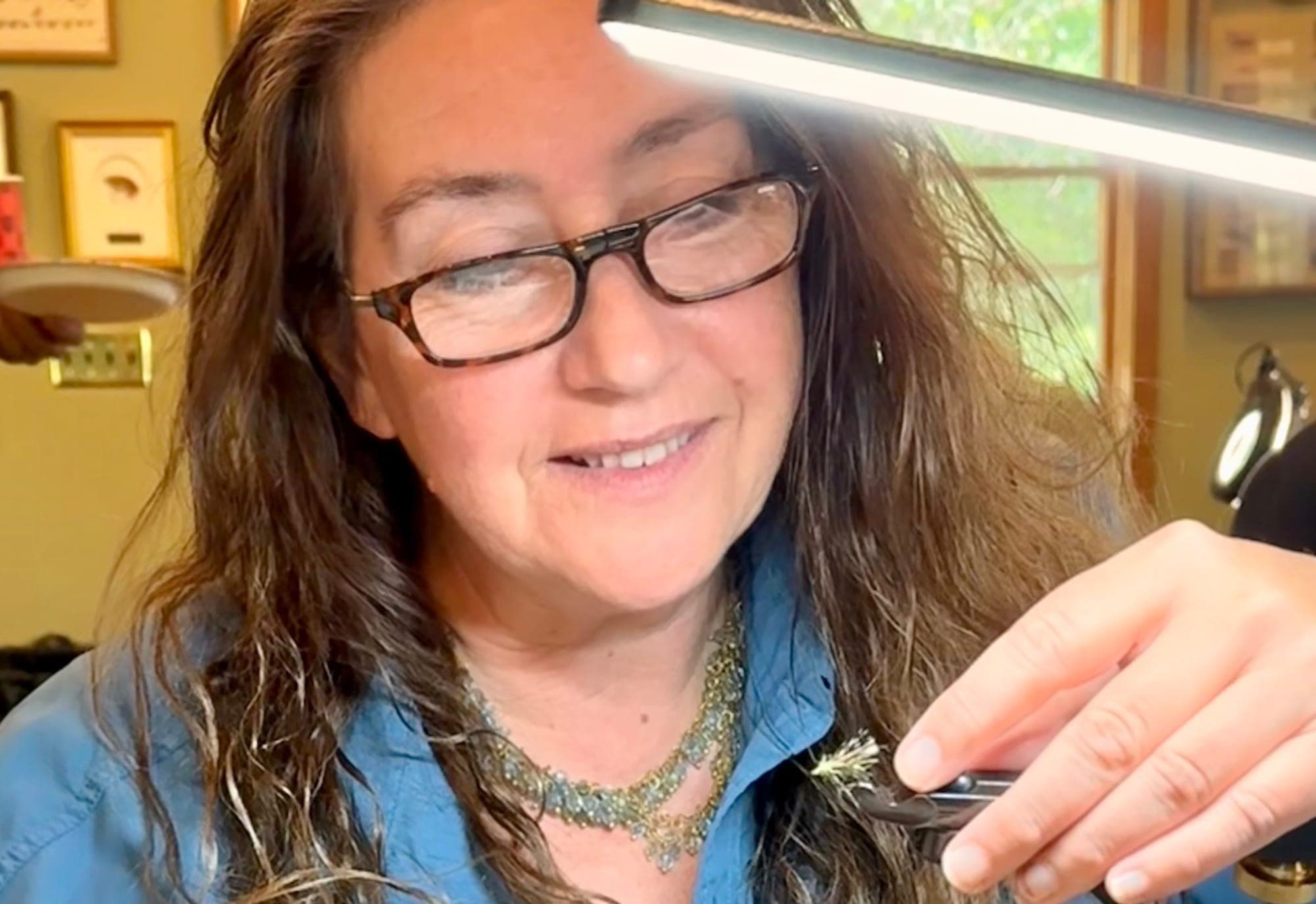
In our first in a new series of interviews with fly tyers we start with the traditional Catskills tyer, Christina Mueller.
How did you first become interested in fly tying, and what drew you specifically to Catskill-style flies?
I started tying flies at the same time I began fly fishing, in the early 2000s. As a beginner, I was losing flies on a daily basis, so when the fly shop owner told me that a lot of people tied their own flies to save money, it seemed like a good idea at the time. We all know how that ends up.
I struggled with tying in the beginning, like anyone does, but I was really taken with it as an art form. I loved the sheer variety of materials, the patterns, and the possibilities. My early reading described fly tying as impressionistic, and that really appealed to me. I remember reading that grizzly hackle was chosen for winging because the barring looked like the blur of mayfly wings trying to dry off for flight. I thought it was incredible that someone, at some time in history, made that association. I was immensely interested in natural materials, how they could look lively in the water, and how light was affected when it passed through them.
In your view, what defines a true Catskill-style fly?
In a classical sense, we think of the traditional dry fly with upright and divided wood duck wings, beautiful stiff hackle collars, tails, and a lovely slender body. But the Catskill tradition is more than that.
The Catskill Fly Tyers Guild defines a Catskill fly as “any pattern known to have originated roughly within the Catskills and to have been designed largely for use there.” You see, the Catskills embody a huge area and time span, from the earliest days to modern time. The anglers and artists who helped create the flies that represent the region are varied and numerous, as much so as the waters they fished and the way the seasons changed. That history runs from Gordon and Cross, to the Dettes and Darbees, to modern influential Catskill tyers.
In terms of a traditional Catskill dry, it typically maintains the slimmest possible profile, yet withstands repeated abuse. It has to be easy to cast, land properly, and then ride on or in the water in a very specific way. Because it is generally sparse, the materials need to be prime quality with good markings. And for the sake of practicality, they should also be readily available.
To me, a traditional Catskill fly is a perfect balance between beauty, function, effectiveness, and economics.
Which historic Catskill fly tyers have had the greatest influence on your work and approach to the craft?
Great question. I’ve been exposed to and influenced by Catskill fly tyers for far longer than I realized. Their styles and patterns really permeate the fly tying worldwide, so I suppose it’s easy to say that most tyers have been exposed to them in some way and possibly shaped by them.
I’d have to say Al Caucci was a massive influence on me, though I didn’t realize it for many years. Art Flick, too, and Preston Jennings. There’s a commonality there in how light affects color and how materials change color when wet. Color has long been a fascination of mine and a hallmark of my own personal fishing patterns.
Now that I have the opportunity to study Catskill fly tying more deeply, I’m learning where some of those influences came from.
What role has the Catskill region played in shaping the history and culture of American fly fishing?
The Catskills are often treated as the spiritual home of American dry fly fishing. The central figure, Theodore Gordon, learned from the English dry-fly tradition, including Halford, but reshaped it for Catskill waters, river currents, and American fish bugs. Rube Cross refined these early patterns into the epitome of elegance we associate with Catskill dry flies today.
The region also shaped the culture of fly fishing. It gave us the ritual of reading hatches, casting delicately to rising trout, gathering at famous pools, building rods, fine-tuning patterns, converging at the end of the day to swap fish stories, and passing knowledge from angler to angler. Fly fishing in the Catskills was much more than a pastime. It became a culture, a vocabulary, and a mythology surrounding the careful hatch-matching style associated with Eastern dry-fly fishing.
How important is it to preserve traditional Catskill patterns and tying techniques?
Incredibly important. First, it’s clearly about preserving the immense richness of history. Regardless of whether you ever tie a Catskill pattern, fish one, or even come to the Catskills, the history of fly fishing in America deserves to be protected for its own sake.
What is the most challenging aspect of tying Catskill-style dry flies well?
I don’t believe there is one single most challenging aspect. It’s a series of small but critical details that add up to a well-tied fly.
First, you need a proportionally correct hook. It’s the chassis for the entire fly, and if it isn’t right in proportion, there’s no way the finished fly will come out the way you envision it.
Second, you really need to use the best quality materials you can find. Not necessarily the most expensive or the most historically correct, but good quality.
Let’s take wood duck, for example. Wood duck is a big part of Catskill dry fly patterns, but it’s expensive. Mallard dyed wood duck gold is a good alternative, especially for practicing. But when you buy a big bag of dyed mallard, most of us just take the first decent-looking feather from the top of the bag. Unfortunately, it’s generally small, curled up, has very little marking, is wispy, is a pain to work with, and the result is split wings that look more like a party hat.
It pays to take the time to go through the bag, pull out six or so of the very best feathers, and use those. The rest make great tails and other elements on different patterns.
The final challenging aspect is being picky with your work and willing to redo a step as many times as it takes to get it right. It’s important because as you build a fly, tiny mistakes multiply along the way. It’s not until you whip finish and sit back that you suddenly see all the flaws you somehow missed.
Being super nitpicky throughout the process helps you turn out better flies in the end. And honestly, it makes you a better, more efficient tier.
What are the most common mistakes beginning tyers make when learning traditional Catskill patterns?
Going back to what I mentioned before, using the hooks you grab first instead of a correctly proportioned one and not taking the time to sort through your materials to select the best of what you have. But I think the biggest challenge for those new to Catskill patterns is thinking you can conceal tiny mistakes with more thread wraps, more dubbing, or just more material in general.
We all hear the jokes about the uber tiers counting their thread wraps, and I used to roll my eyes, too. But when you’re trying to craft a super sparse fly, it actually makes sense. The original tiers weren’t being particular for the sake of it. They were being smart and thrifty, saving materials, saving time, and turning out impossibly sparse flies that floated well and stood up to numerous attacks by fish.
When an old-timer says you only need two or three wraps to fasten down the hackle, more often than not, they’re not trying to be a pompous know-it-all. They’re letting you in on a secret.
What is your favorite Catskill pattern to tie, and what makes it special to you?
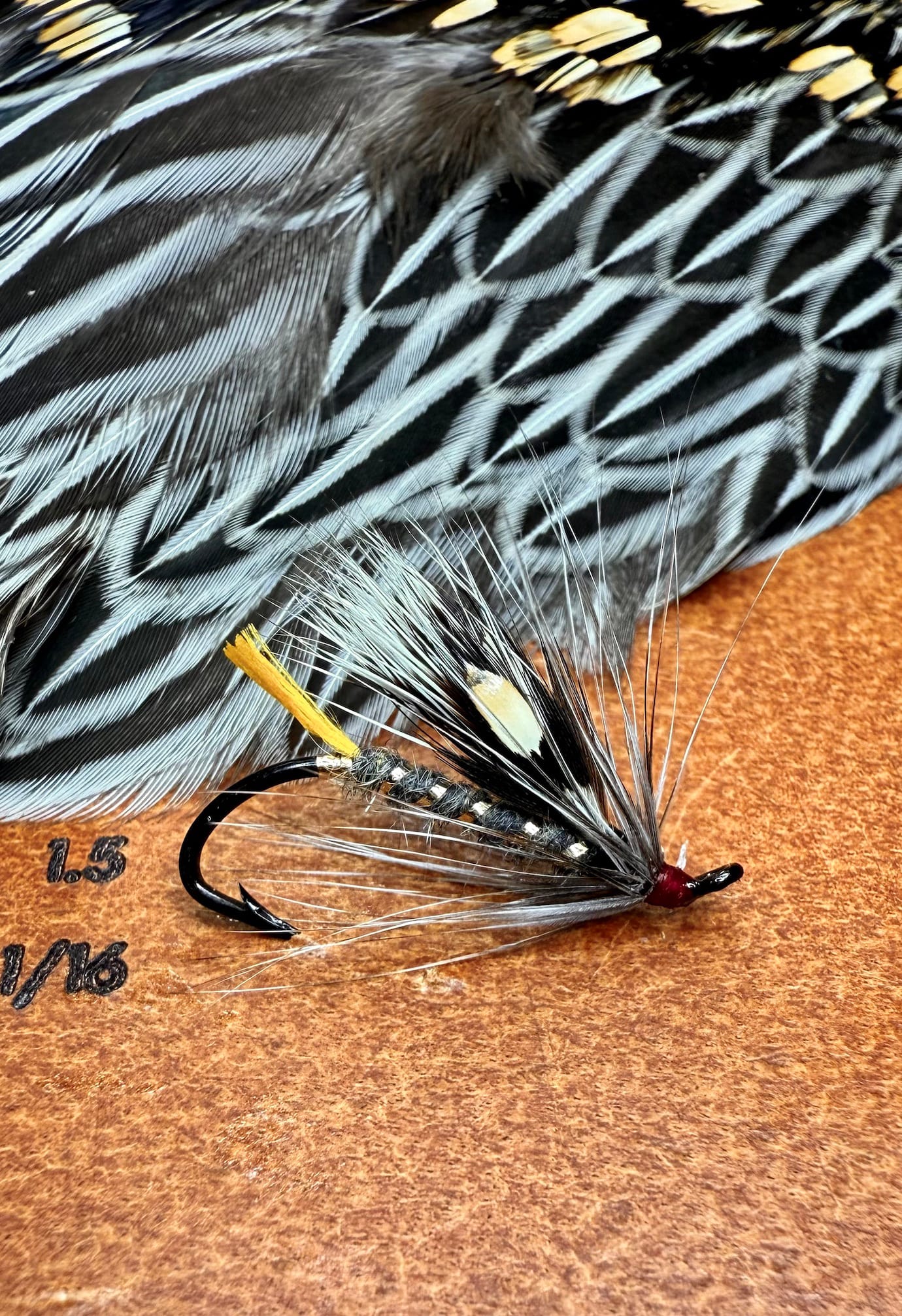
This is so trite, but I have to say the Quill Gordon. It should be the state bird of New York.
The first time I tied it was almost two decades ago. It was one of the earliest patterns I gravitated to. I actually tied it in a wet fly version, as I have a strong affinity for wet fly fishing. I added my own little twists, using the materials I had on hand at the time, and I murdered fish on it that year. I kept evolving it over time, and it has earned a permanent spot in my fly box.
What pattern would you recommend every new fly tyer learn first, and why?
Over the winter, I had the pleasure of helping with a beginner’s class for Catskill dries. It was a four-part series, and each pattern built challenges upon the previous one. The goal was to give participants the skills to tie most Catskill patterns, because once you learn how to select materials and understand the techniques for working with them, you suddenly have a very broad vocabulary for tying.
We tied four patterns, the Conover, the Red Quill, the Whitcraft, and the Pink Lady.
Of those four, I’d recommend the Red Quill. It uses accessible materials, is a good entry-level pattern, and is deceptively challenging yet forgiving at the same time. It teaches a new tier a lot about careful selection.
Choose the materials properly, and it’s a fun, fast tie. Choose them poorly, and it’s frustration city. It’s a good pattern to learn on, and bonus, it catches fish like crazy all season long.
Have modern materials enhanced traditional Catskill tying, or do they take away from the original style?
Well, let’s be clear on modern materials. I don’t think there is anything wrong with using them and today’s Catskill fly tyers certainly do. Had many of these materials been available years ago, I’m sure the pioneers of Catskill tying would have used them, too. So I don’t want to paint a picture of elitism when it comes to traditional materials.
The early artists who created these patterns used what they had available. Silk was common back then, as were game birds, poultry birds, and large and small game animals. People hunted for sustenance and then used what was left to tie flies in the winter and catch fish in the spring.
I think anyone who really enjoys tying traditional Catskill patterns also has an appreciation for that history. Using historically traditional materials goes hand-in-hand with the feeling of connection to the artists and visionaries of the past. It’s a little like time traveling for me.
So I’m not against modern materials at all. I use them myself, and I admire the way many modern Catskill tyers incorporate them beautifully. However, when it comes to tying a classic Catskill fly in the traditional sense, it wouldn’t be the same without adhering to tradition.
Which Catskill patterns have consistently produced fish for you over the years?
Ah, quite a few. I have probably taken more fish on Adams variations than all of my other flies combined. I tie a lot of personal fishing flies that are my own unique style and twist, and my very best pattern is based on an Adams.
This past year I’ve been experimenting with a lot of wet flies out of Ray Bergman’s Trout, and I have to say the Fish Hawk has earned a permanent spot in my box. It’s as venerable as a Hare’s Ear and a ton of fun to fish.
The Red Quill is reliable as well, along with the Grey Fox Variant. The Delaware Adams is a fabulous fishing fly and surprisingly amazing for caddis hatches. Part of the charm for me is that these patterns are not just stodgy artifacts of history. They actually work well.
The fall of 2025, a friend and I went out for steelhead in Erie, Pennsylvania. Inspired by Harry Darbee’s hair wing salmon fly patterns, I resolved to only fish traditional old patterns. No eggs. It took a little time to get dialed in, but once I did, I was amazed at how ferociously the steelhead responded. What a cool feeling to land a fish with this gorgeous old-time pattern in its jaw.
How would you describe your personal tying style, and how has it evolved over time?
My personal tying style is very eclectic. I love how light plays with materials, and I love motion. I also love materials that naturally have variation to them, like streaking of color, teeny tiny specks, materials that capture tiny bubbles, or anything that feels alive.
Many of my own personal fishing flies merge the messy fun of Betters, the thoughtful use of color from Caucci and Jennings, and the sleek minimalism of classic Catskill patterns, with a lot of fun flounciness thrown in for movement and catching bubbles and refracting light. I use quill bodies, CDC, shaggy natural dubbings, spun fur collars, and sparse, often overly long hackle.
I’m not a fan of a lot of flash. A bit of dull wire, a small tip or tag of Mylar, maybe a touch of Antron in my dubbing, and judiciously used peacock. That’s about it for sparkle for me.
I like more natural-looking colors, but far from realistic. Most of my own personal patterns fish interchangeably from dry to emerger to wet. I’m also very quick to go small. Size 24s are a comfort zone for me.
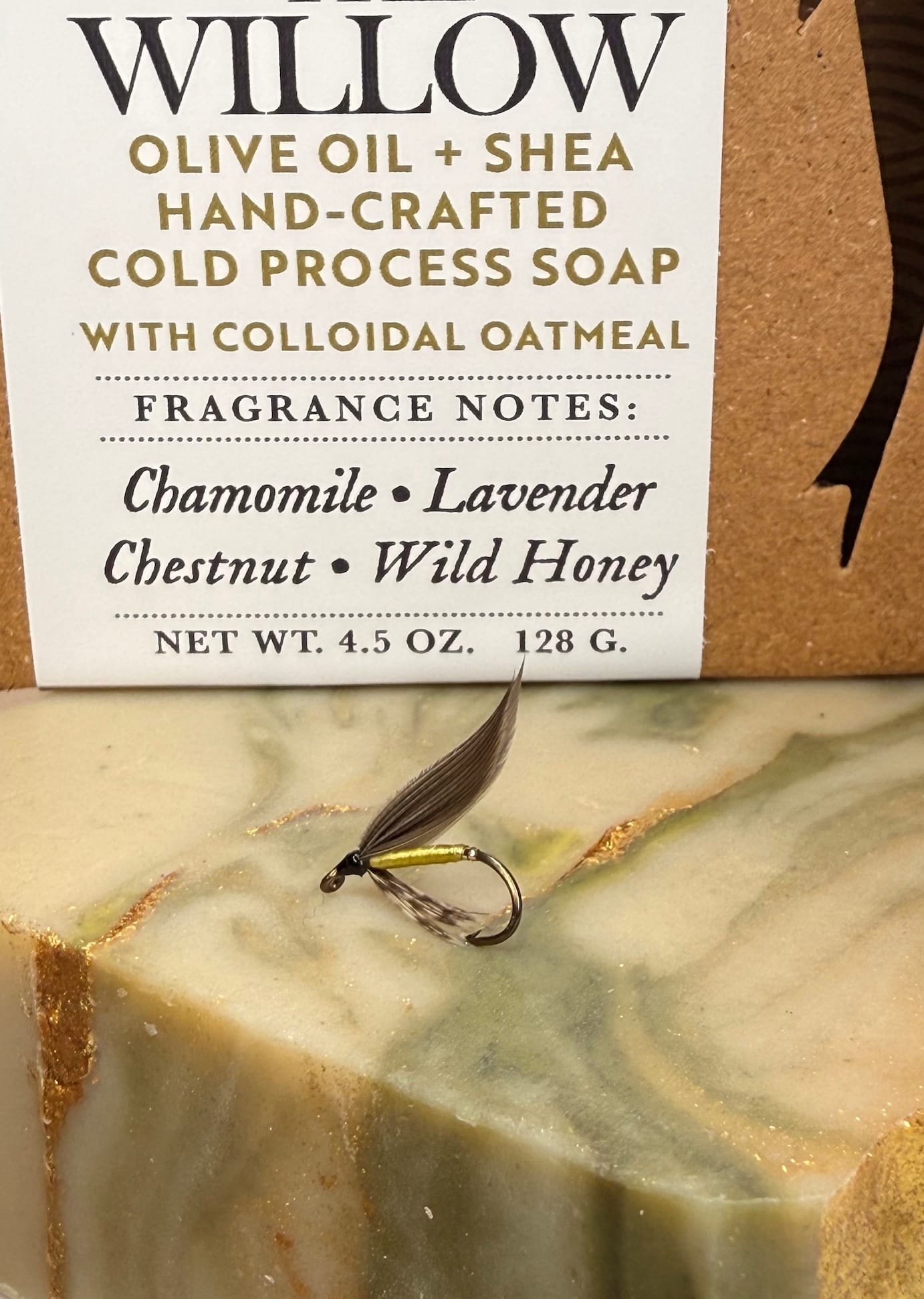
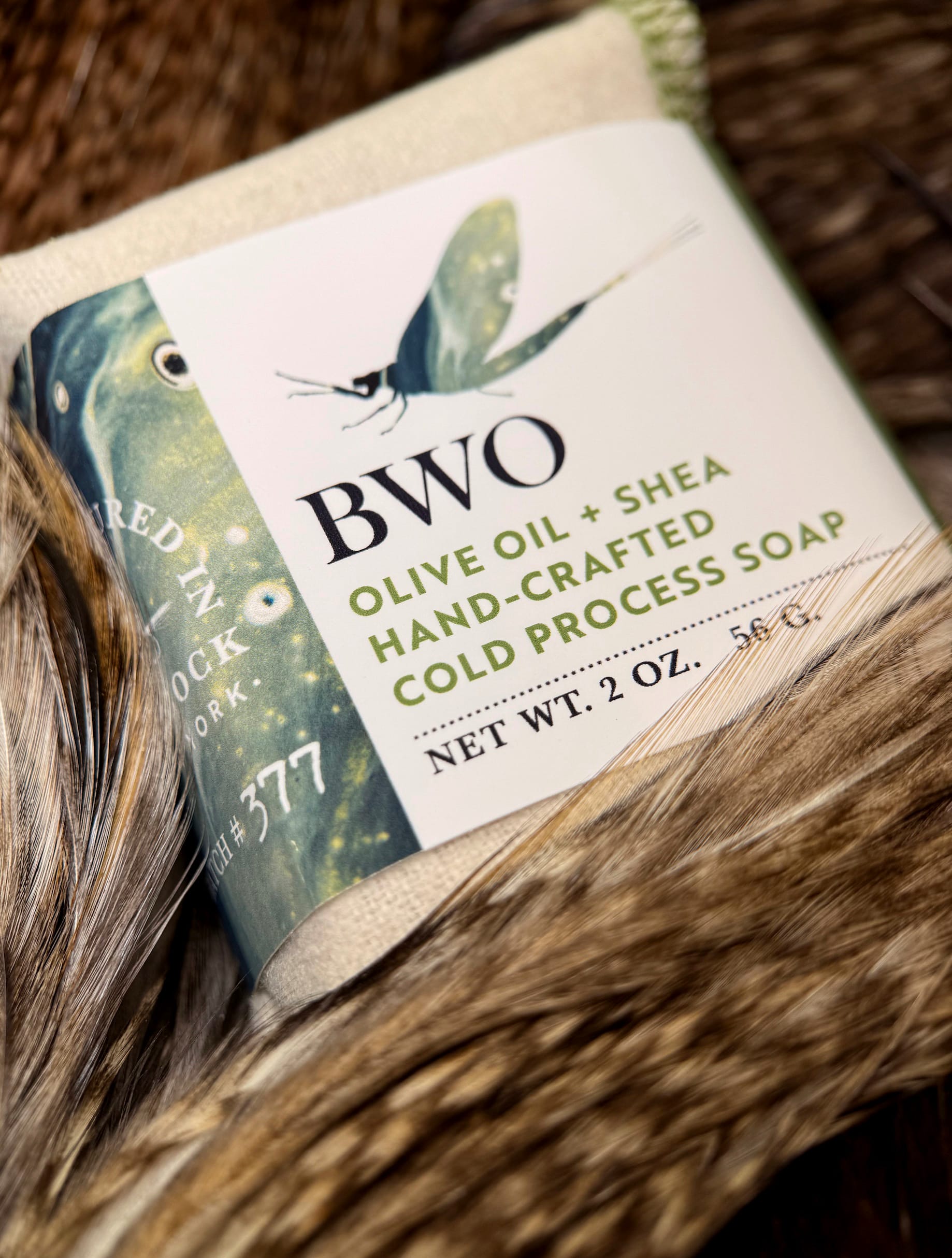
Your soap and candle business draws inspiration from classic fly-fishing pattern names. How did that idea come about, and what has it been like blending creativity, craftsmanship, and fly-fishing heritage into a business?
Oh my goodness, I’m so glad you asked! Creating fragrances that evoke classic fly patterns is as much fun as tying them.
When I discovered I could make a bar of soap that not only made me feel fresh and clean, but also eliminated that dry, itchy feeling after showering, I immediately cut down on my use of after-shower lotions. That was eye-opening for me. I was cutting costs, reducing plastic waste, and I could travel lighter. At the time, I was flying around the country a lot fishing and exploring, so anytime I could cut back on a liquid or lotion, that was a huge win.
Creating scents is incredibly fun in its own right, and one day I concocted a fragrance that reminded me of rain. I immediately thought of an incredible olive hatch I once found myself in, with the fish going bonkers and me having the river to myself that day. It was a magical moment, and I loved that a simple scent triggered such a powerful and relaxing memory. I couldn’t stop smelling the fragrance all day and smiling. That was my lightbulb moment.
If I could create fragrances that trigger memories of happy times spent on the water, how lovely would that be? To transport yourself to your happy place, if only for a flash.
I create a lot of scents as interpretations of moments in time. The weather, the time of year for certain hatches, the ambient smells of being on the water, or hiking in the woods blue-lining.
When I started taking Catskill fly tying seriously, I was immediately drawn to the beauty and flamboyance of many of the old patterns, the bright silks and feathers. The first fragrance I created from that inspiration was the Abbey, with its striking candy-striped red and gold body.
When I went to tie it, I was muttering to myself to find my candy apple red floss, and in my mind I could suddenly smell the sweet green fragrance of walking through an apple orchard on my way to intercept some lake run browns. And I thought, apples! So I tried to recreate that memory with Macintosh apple and pine needles, green fig and ginger peel. Now, every time I make a batch, it brings me right back to that incredible morning.
Turning this into a business has been incredibly rewarding on so many levels. I taught myself a craft, then studied it and perfected it into a product I feel incredibly proud of. I learned a lot about business processes, sourcing, and how important and challenging it is to find responsibly-produced materials.
I learned a lot about my own habits, too. In minimizing single-use plastics in my business, I’ve adopted the same approach in my own lifestyle. I look at things and make purchase decisions differently now. I’m more intentional in almost every aspect of my personal habits by extension of wanting to build a business that is intentional.
I give a portion of sales back to charities I feel strongly about, and that has brought me closer to a network of amazing people I never would have gotten to know otherwise. My friend circle has grown exponentially, and who I am as a person has become deeper on so many levels.
And all of this ties in perfectly with my interest in Catskill flies and my reverence for those exceptional individuals who carry on the tradition. I’ve grown as a person, and I feel that giving back isn’t just something I do once in a while. It’s a lens I view the world through now.
What advice would you give someone just beginning their journey into Catskill-style fly tying?
First, welcome! This is an incredibly fun journey, and a journey it is. Don’t be fooled by how simple these flies look. Catskill-style flies are sparse, but that sparseness is what makes them so challenging and so rewarding. Don’t be put off by the materials used, just a few basics is all you need to get started.
I would tell a beginner to start with simple patterns, like the Red Quill, and focus on proportion, neatness, and getting selective about using the best of the materials available to you. Don’t use just any hackle, use the one correctly sized for the hook you choose. Don’t use just any hook, pick the most proportionally accurate hook you can find. There are many modern hook makers that make classic proportions, and they don't have to be expensive or hard to find. Pay attention to how much thread you are using, and where you start and stop the thread on the shank. These all sound like tiny details, but in Catskill tying, the tiny details are the whole game.
I’d also say to pick one pattern and tie it over and over again. Don’t tie it once, decide it looks terrible, and move on. Tie six of them and really focus on going slowly and deliberately. Stop to correct mistakes rather than tying over the top of them. Look at what changed from the first to the last. Develop a critical eye. That is where the learning really happens.
Most of all, seek out people who tie classic Catskill flies. Catskill fly tying is a tradition, and traditions are kept alive by people. Watch good tyers. Ask questions. Listen to the little bits of advice that might not make sense right away, because later on, you’ll realize someone handed you a key.
And then fish the flies and have fun! There is nothing quite like watching a trout rise to something you made with your own hands.
What do you hope the next generation of fly tyers learns from the Catskill tradition?
The incredibleness of fly anglers. Really. The patterns are amazing. The history is amazing. The stories are romantic and swashbuckling. But it all boils down to the people.
The people I have met in this world who are really taken with the sport of fly fishing and fly tying are just solid human beings. The folks who carry the flag of the Catskill tradition are some of the most human, authentic, passionate people I have ever met in my life.
I get moved to misty eyes sometimes when I tell non-anglers how special it is where I live, and how special the people are that I get to interact with. My friends are some of the most amazing people I have ever met. Passionate, dedicated, sharing, and so incredibly giving of their time, expertise, and knowledge. A wise man once told me that a true Catskiller is someone who always stands by their word, always acts with honor, and always goes out of their way to help another angler who is struggling. It’s true.
You can follow Christina's Instagram, where she highlights her beautiful Catskills flies, as well as her handmade soaps and skin care here.
Want more NOW stories?
Join thousands of readers getting our best outdoor content. Free, no spam.
Join thousands of outdoor enthusiasts