2025 Fishing Participation Report: What the Numbers Say for Women and Fishing in 2026
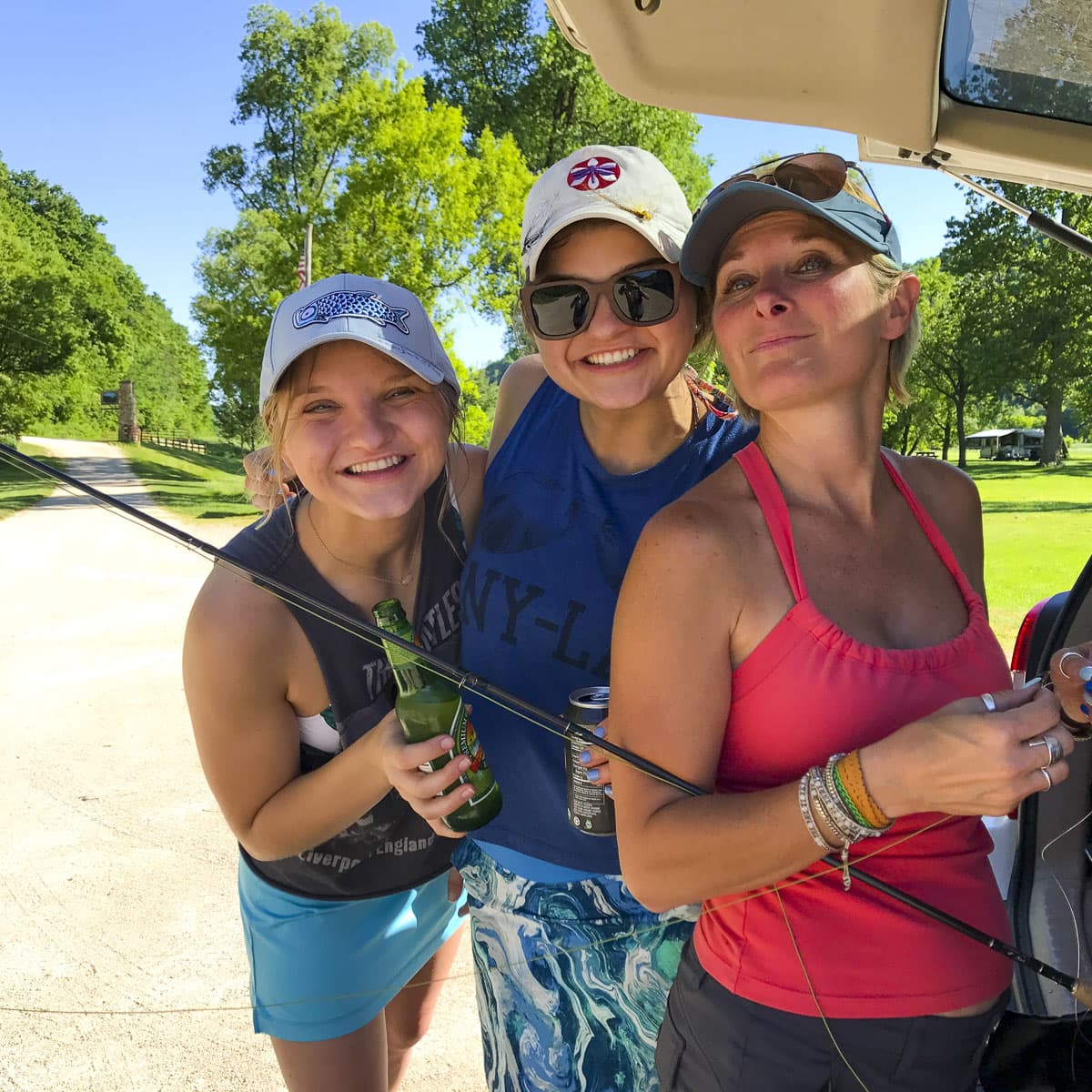
Three friends, tangled lines, cold drinks, and a tailgate full of gear — the kind of afternoon that keeps women coming back to the water.
Fishing Hit a Record in 2024. The Hard Part Starts Now.
I read the Recreational Boating & Fishing Foundation’s 2025 Special Report on Fishing with one goal in mind: translate the numbers into what they mean for real outdoor lives. Not just anglers. All of us. This report tracks participation through 2024, and it tells a clear story. Fishing is big, still growing, and still acting like a gateway to time outside. It is not “solved.” Retention is the next fight.
57.9 million people went fishing in 2024
That number matters even if you do not fish. It signals how many Americans still choose water, weather, and open air as their reset button. In 2024, 57.9 million Americans ages 6 and up went fishing. That equals 19% of the U.S. population, and both marks set records.
The second headline sits right beside the first: churn. Fishing lost 16.6 million participants in 2024. The report frames that as a 23% churn rate, worse than five years ago and far worse than a decade ago.
That is the tension in one breath. Record participation, and record leakage.
Women hit a record high too, and that is not a footnote
The number I circled first was this: 21.3 million women went fishing in 2024. That is the highest female participation on record. Men hit a record high as well, at 36.7 million.
Those two facts can live together. Women are not “taking over.” Women are showing up in larger numbers inside a sport that is still male-majority. That is progress, and it changes the next set of decisions. It changes what gets built, what gets stocked, how brands speak, and who feels welcome at the ramp, the dock, and the fishing stores.
What should a hiker, hunter, paddler, or skier care about fishing data?
Fishing holds a unique place in outdoor culture. It ties together access, family time, conservation funding, and water stewardship. When participation rises, more people care about clean water and public access. When participation drops, those connections thin out. The report makes that link practical, not poetic.
New anglers are real, and they are not the full story
In 2024, 5.1 million Americans tried fishing for the first time. That is 9% of total participants, up from 7% in 2023. That sounds like a win. It is. Then you look at the churn line again. The system brings people in, and it loses too many of them.
The infographic breaks participation change into three buckets: 5.1 million new anglers, 11.8 million returning participants, and 16.6 million lost participants. So the work is not only recruitment. The work is building “second trip” and “third trip” habits.
Freshwater stays steady. Saltwater inches up. Fly fishing holds above 8 million.
For a general outdoor audience, these splits matter. They show where the demand sits.
- More than 43 million Americans went freshwater fishing in 2024, steady for the third straight year.
- Saltwater fishing grew to 15.1 million in 2024, after hitting 15 million in 2023.
- Fly fishing topped 8 million participants for the second year in a row.
Fly fishing staying above 8 million should get the fly world’s attention. It signals a bigger pond than many of us picture when we think of “fly anglers.” It puts pressure on access, education, and retail experience. It pushes the culture to widen its shoulders.
Youth is the hinge point, and girls need support past the teen years
The report repeats a truth we all recognize in our own stories. Eighty-five percent of current fishing participants fished before age 12. Youth participation in 2024 reached 12.7 million. Households with children fish at higher rates. The infographic shows 22% of U.S. households with children fished, compared to 16% of households without children. Here is the part that hits hardest for women’s growth. Participation rates fall sharply after age 18, and female youth quit at a rate 11% higher than male youth.
That one sentence should shape 2026 planning across the industry. A record number of women fished in 2024. The pipeline leaks more for girls as they age out of youth fishing. If the sport wants women to stay, it has to meet young women where they are, at the moment life changes. College. Jobs. Moves. Confidence. Belonging.
The “avid” core is thinning, and that affects culture and conservation
A lot of outdoor industries rely on a small core that shows up often. Fishing is no different. In 2024, just 32% of anglers fished once a month or more. A decade ago, that figure sat at 37%. Fewer days on the water changes everything. It changes license renewal rates. It changes gear buying patterns. It changes skill growth. It changes who becomes the mentor. If you want more women in fishing, pay attention here. Frequency builds confidence. Confidence builds voice. Voice builds community.
Boating sits in the same retention problem
The Special Report centers on fishing, yet it sits inside a larger water-recreation reality. RBFF’s broader research notes that boating participation faces similar headwinds. It estimates 85 million Americans went boating in 2023, down from about 100 million in 2020. (Take Me Fishing)
That matters for women, too. Boating access shapes fishing access. Comfort on a boat shapes whether someone says yes to the invite. For many women, boating is not a “separate” category. It is the bridge to saltwater fishing, Great Lakes fishing, and family time on the water.
What these numbers point to for 2026, and for women
Here is what I see in the data, stated plainly.
Women’s growth is real.
21.3 million women fished in 2024. That is not a niche audience. It is a major outdoor constituency.
Retention becomes the main story.
A record 57.9 million participated, and 16.6 million dropped out in the same year. If churn keeps climbing, records can turn into plateaus.
The biggest women’s opportunity sits at age transitions.
Girls quit at higher rates than boys. Fixing that is not a marketing line. It is mentors, peer groups, safe access, and beginner gear that does not talk down to them.
Fly fishing stays strong, so fly fishing culture has to keep evolving.
More than 8 million participants is a big tent. Fly fishing will keep growing when it keeps welcoming diverse anglers who aren't the old white man of the past (no offense to the old white man!).
Family fishing remains the easiest entry point.
Kids drive participation. Parents drive opportunity. Areas that make it easy to fish for two hours after work will beat areas that necessitate a full day and a perfect plan.

The quiet lesson for every outdoor brand
Fishing’s record year did not happen in a vacuum. People still crave simple, reachable outdoor time. They want it with friends. They want it with family. They want it near home. The report even calls out social time, relaxation, and time outdoors as key drivers for new anglers.
That is not only a fishing story. It is a reminder for every outdoor category that wants to grow women’s participation. Lower the friction. Increase the welcome. Build the second trip.
And pay attention to the women already on the water. The record is not the end point. It is the starting line.
You can see the whole report here
Want more NOW stories?
Join thousands of readers getting our best outdoor content. Free, no spam.
Join thousands of outdoor enthusiasts